SOM-J Live Warhead Test Hits Target, Strengthening Türkiye’s Stand-Off Strike Portfolio
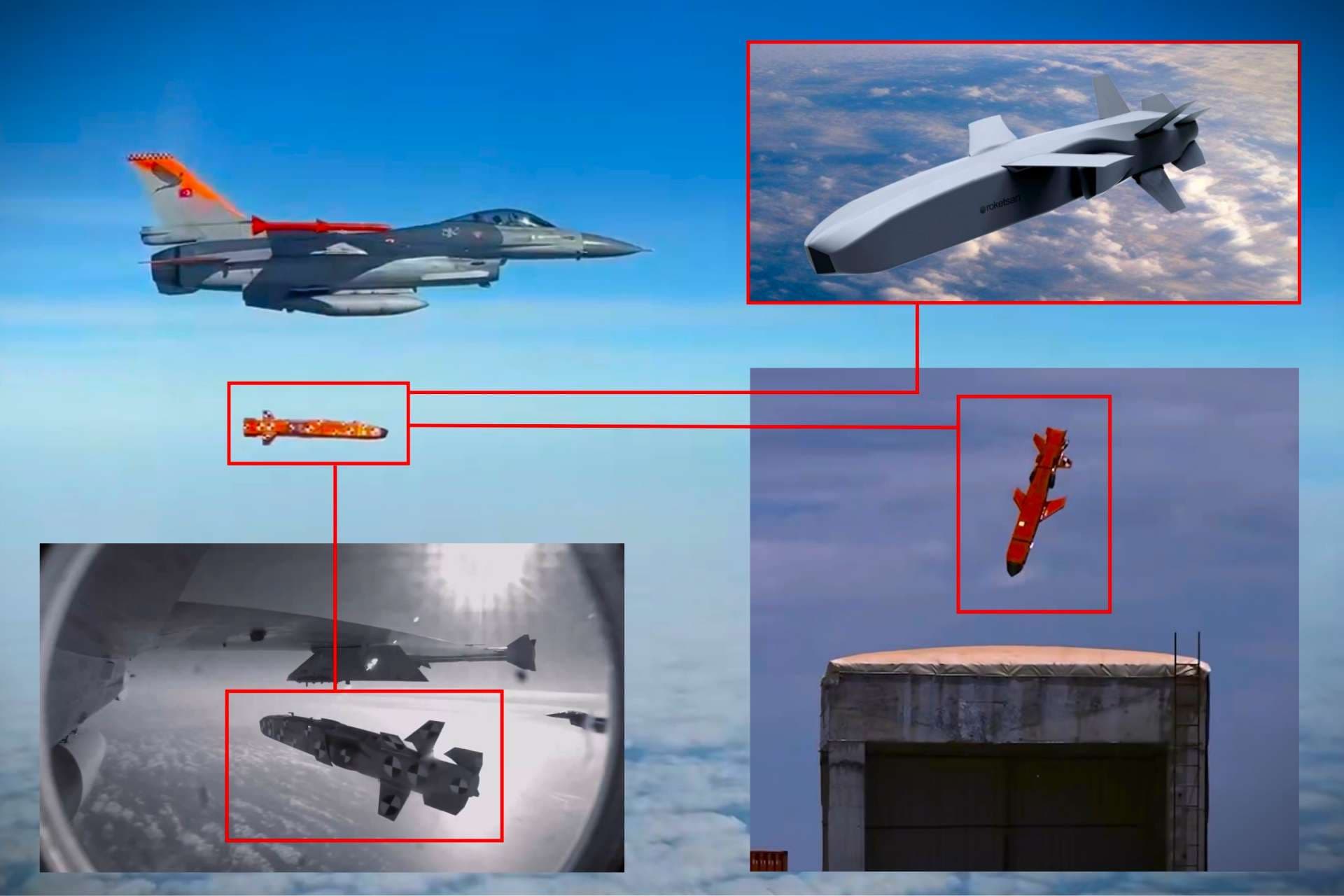
Türkiye’s SOM-J live warhead test has emerged as one of the most consequential defence developments of 21 March 2026, after the missile reportedly hit its target with full accuracy during its latest firing. Why it matters is not limited to a single test event. The result reinforces confidence in a compact stand-off cruise missile designed for contested environments and, just as importantly, links the programme more clearly to Türkiye’s future combat aviation ecosystem, including KAAN and Bayraktar KIZILELMA.
Key Facts
- Date: 21 March 2026
- System: SOM-J indigenous stand-off cruise missile
- Developer base: TÜBİTAK SAGE, under Türkiye’s national defence technology ecosystem
- Test outcome: Live warhead firing reportedly hit the target with full accuracy
- Operational logic: Low-observable, high-manoeuvrability stand-off strike against high-value targets
- Integration track: Ongoing integration work for KAAN and KIZILELMA
Why the SOM-J Live Warhead Test Matters
The SOM-J live warhead test is strategically significant because it validates more than guidance and propulsion. A live warhead event is a stronger indicator of operational maturity than a captive-carry milestone or a non-warhead release. It suggests increasing confidence in the missile’s end-to-end kill chain, from launch and flight profile to terminal effectiveness.
For Türkiye, that matters in three ways. First, it strengthens the country’s long-range precision-strike toolkit at a time when air operations increasingly depend on stand-off effects rather than close-in penetration. Second, it supports the broader logic of sovereign airpower, where indigenous platforms and indigenous munitions are developed as a coherent combat system rather than as separate procurement lines. Third, it adds momentum to a programme that can serve both current and next-generation air platforms.
From Tactical Success to Airpower Architecture
Official reporting around the 21 March test placed unusual emphasis on platform integration. That is the real strategic signal. SOM-J is not simply being framed as another precision-guided weapon; it is being positioned as part of the future air combat architecture that will sit alongside KAAN and KIZILELMA.
That point is important because platform relevance increasingly depends on weapons compatibility. A fighter or uncrewed combat aircraft becomes far more credible when paired with a survivable, network-enabled stand-off weapon able to threaten land and maritime targets from outside dense threat rings. In that context, SOM-J is better understood as an enabling layer in Türkiye’s broader manned-unmanned teaming and deep-strike design.
Technical Characteristics Driving Interest
Publicly cited programme attributes help explain why the test attracted attention across the defence community. SOM-J has been described with features including low observability, high manoeuvrability, post-launch control, network-enabled operations, and an imaging infrared seeker. It is also described as suitable for engagements against land targets and surface targets, giving the missile relevance beyond a single mission set.
That combination matters operationally. Low observability and manoeuvrability improve survivability in contested air-defence environments. Post-launch control and network-enabled functionality can improve mission flexibility, especially when commanders require target updates, re-attack logic, or dynamic mission management. In a theatre shaped by dense sensor coverage, electronic warfare, and compressed decision timelines, those traits are no longer optional luxuries. They are becoming baseline requirements for credible strike systems.
Programme Implications for KAAN and KIZILELMA
The explicit linkage to KAAN and KIZILELMA gives the test broader programme value. For KAAN, SOM-J supports the concept of a nationally integrated strike package built around indigenous sensors, platforms, and munitions. For KIZILELMA, it adds weight to the argument that Türkiye is not only building a high-performance uncrewed combat aircraft, but also shaping the weapon ecosystem required to make that aircraft operationally relevant.
This matters for export credibility as well. International customers increasingly assess not only a platform’s airframe or engine trajectory, but the depth of its mission system and weapons ecosystem. A platform family tied to mature indigenous munitions is structurally more attractive than one dependent on uncertain third-party release approvals.
Industrial and Strategic Reading
At the industrial level, the SOM-J live warhead test underscores the value of sustained coordination between Türkiye’s research institutes, defence primes, and programme authorities. It also shows why sovereign strike capability is not merely about owning a missile design. It depends on testing rhythm, qualification discipline, integration pathways, and a stable demand signal across multiple platforms.
Strategically, the test points to a clearer trend: Türkiye is moving further from platform-centric procurement logic toward ecosystem-centric force design. In practical terms, that means weapons, sensors, software, command networks, and airframes are being developed to reinforce each other. SOM-J fits squarely within that model.
Assessment: What Comes Next
The next question is no longer whether SOM-J is relevant. It is how quickly the programme can move from successful headline-grabbing tests toward a more transparent path of qualification, serial fielding, and platform integration. Additional evidence of flight envelope expansion, platform-specific release trials, and operational doctrine development will determine how fast the missile transitions from a promising capability to a routine element of Türkiye’s strike inventory.
For now, the SOM-J live warhead test marks a meaningful advance. It strengthens the credibility of Türkiye’s indigenous stand-off strike portfolio and signals that future combat-air platforms are being paired with an increasingly mature domestic weapons stack.
Further Reading
- Bayraktar Kızılelma Proves Strike Capability
- KAAN Fighter Aircraft: Türkiye’s Fifth-Generation Air Superiority Jet
- Anadolu Ajansı: SOM-J seyir füzesi, canlı harp başlığıyla gerçekleştirilen son test atışında hedefi başarıyla vurdu
- TRT Haber: Milli seyir füzesi SOM-J canlı harp başlığıyla hedefini tam isabetle vurdu