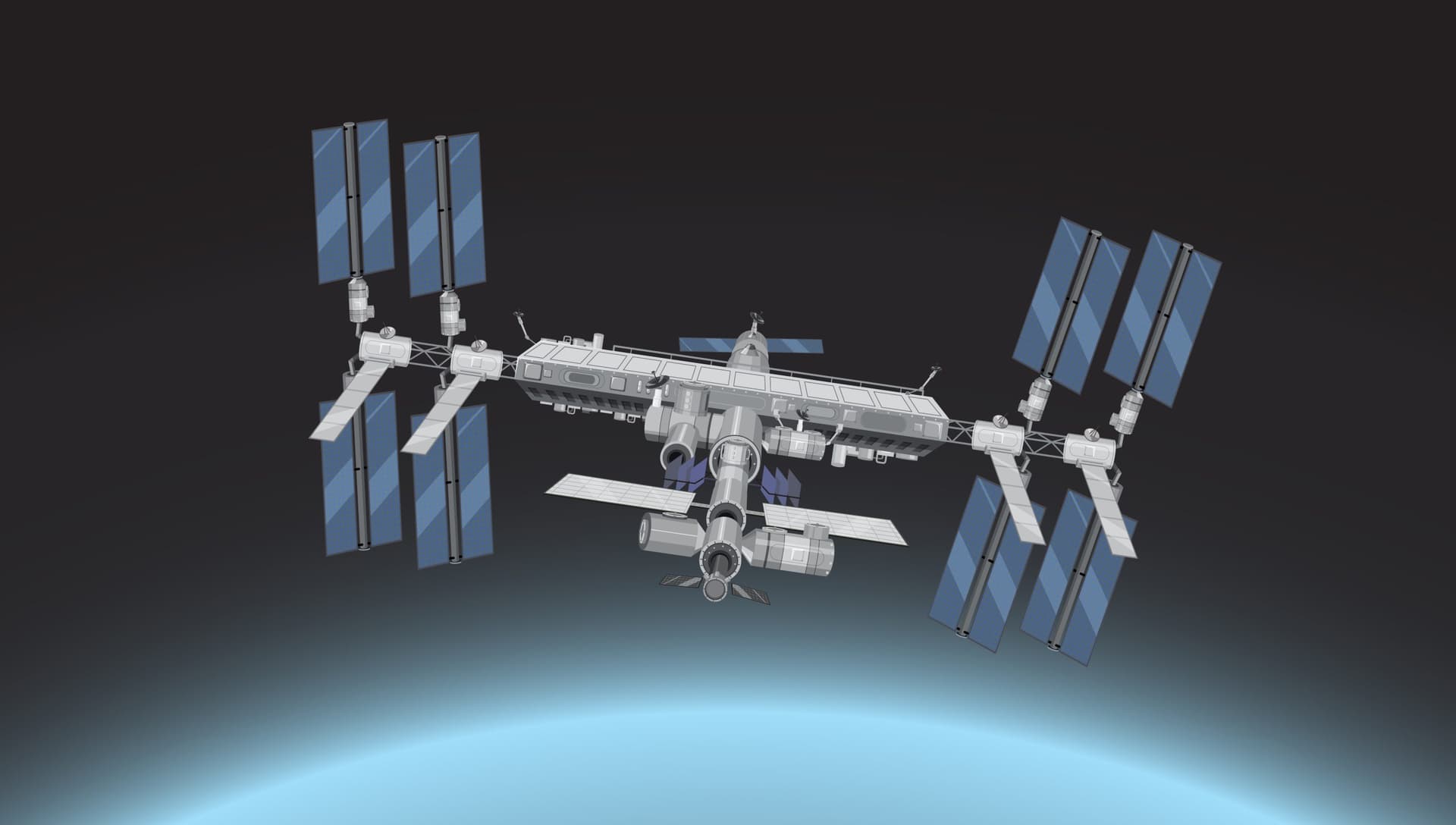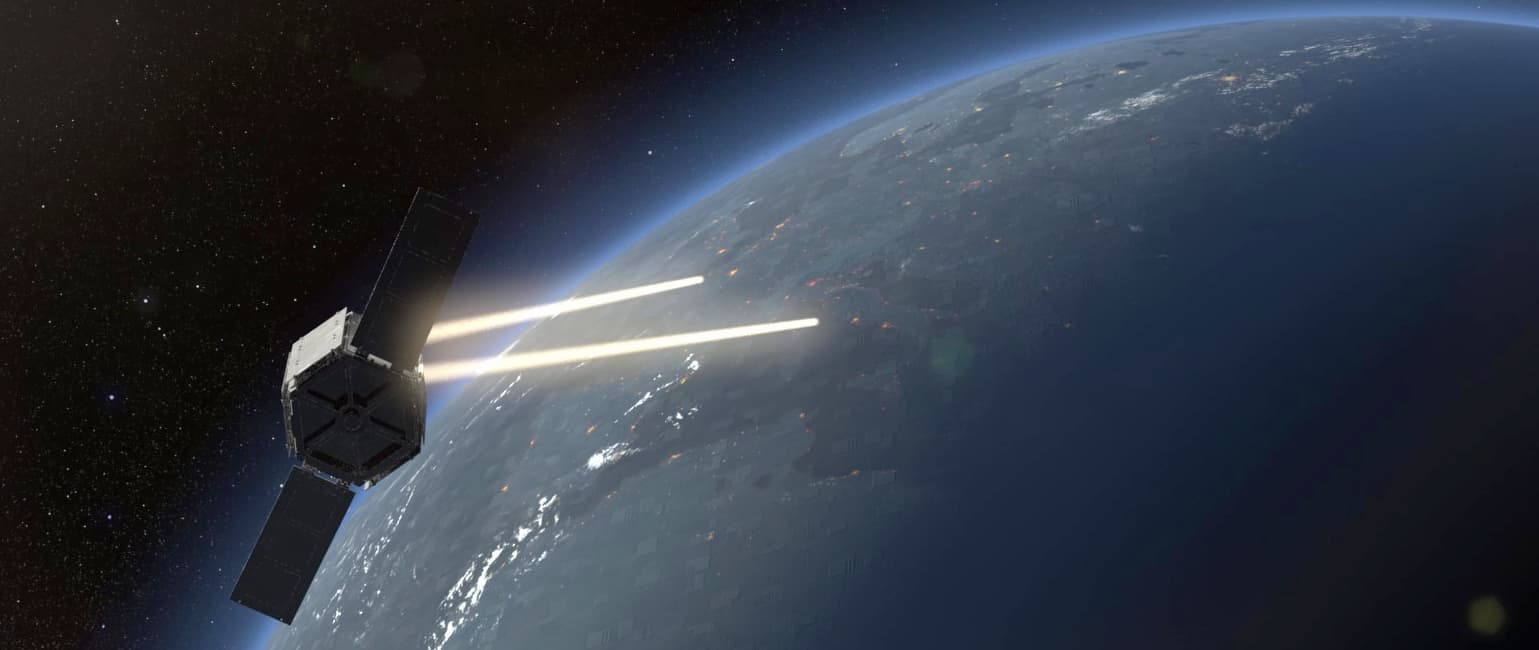
Quantum-secure communications and mega-constellations in space are quietly reshaping the foundations of military command, control and communications (C3). As quantum computing moves closer to reality, today’s public-key encryption could become obsolete by the 2030s. At the same time, hundreds of commercial satellites in low Earth orbit (LEO) are turning space into a dense, contested information layer for modern warfare.
These trends intersect in strategic ways. Quantum-secure links — using quantum key distribution (QKD) and post-quantum cryptography — promise resilient, interception-proof communications. Meanwhile, commercial mega-constellations offer always-on connectivity, even in contested theatres. Together, they could define which side enjoys secure information flow across the air, sea, land and space domains.
Quantum-Secure Communications: QKD, Satellites and Cislunar Concepts
Quantum-secure communications aim to protect data against both classical and future quantum computers. Two approaches dominate: QKD, which uses quantum properties of photons to distribute encryption keys, and post-quantum cryptography, which relies on new mathematical algorithms that quantum computers cannot easily break. Both methods will likely coexist in future military networks.
China has taken an early lead in satellite-based QKD. Its Micius satellite, launched in 2016, that demonstrated entangled photon links between ground stations and space. Follow-on experiments have widened the scope, proving that quantum-secure satellite communications are technically feasible. Chinese planners now discuss a global QKD network, potentially extending to high-altitude platforms and even cislunar space.
Western allies are responding. NATO has adopted a quantum technology strategy, and defence research agencies are funding QKD and post-quantum experiments on aircraft, small satellites and terrestrial networks. The Indo-Pacific theatre is a likely early testbed. Quantum-secure links could protect communications with dispersed island bases, stealth aircraft and submarines operating in heavily surveilled waters.
For readers interested in the broader quantum context, see our related overview on quantum technologies in defence C4ISR .
Mega-Constellations in LEO: Starlink, OneWeb and the New High Ground
In parallel, commercial mega-constellations in LEO are transforming the connectivity of the battlespace. Systems such as Starlink, OneWeb and other emerging constellations deploy hundreds or thousands of small satellites to provide broadband coverage almost everywhere on Earth. These networks already play a visible role in real-world conflicts.
During Russia’s war in Ukraine, commercial LEO connectivity enabled resilient communications for Ukrainian forces when other networks were jammed or destroyed. By 2030, many militaries are likely to integrate deeply with such constellations for beyond-line-of-sight communications, ISR data relay and even Positioning, Navigation and Timing (PNT) as a backup or complement to GPS and other GNSS systems.
However, heavy reliance on mega-constellations comes with vulnerabilities. Satellites can be targeted physically, for example, by anti-satellite (ASAT) weapons, or disabled through cyber operations. Signals can be jammed, spoofed or disrupted by electronic warfare units. Russia’s destructive ASAT test in 2021 underscored the physical risks, while attempts to interfere with commercial satellite internet during the early phases of the Ukraine war highlighted the cyber and EW dimension.
For a more detailed discussion of commercial space resilience, see our piece on leveraging commercial space for military operations .
Quantum-Secure Communications and Mega-Constellations: Combined Effects
The true impact emerges when quantum-secure communications and mega-constellations converge. In principle, LEO constellations equipped with QKD or post-quantum-capable payloads could form a secure, global backbone for military C3. Quantum-secure satcom would make interception nearly impossible and could also help detect some forms of interference, since quantum signals are highly sensitive to observation.
For the United States and allied forces, integrating quantum-secure communications into existing and planned constellations could mitigate current vulnerabilities. Programmes under the U.S. Space Development Agency already emphasise proliferated architectures and resilient mesh networks. Adding encryption agility and QKD where feasible would further harden these systems against both present and future cryptographic threats.
The flip side is more worrying. An adversary that secures its military communications first may gain an “information sanctuary” in space. In the most extreme version of this scenario, a state could deploy mobile command posts in cislunar space, communicating through quantum links that are practically immune to interception and very difficult to degrade. Traditional approaches to targeting command nodes or intercepting signals become less effective in such an environment.
Space as a Contested Warfighting Domain
These developments reinforce the view of space as a fully contested warfighting domain. The “high ground” now extends from LEO through medium Earth orbit to geostationary orbit and, increasingly, into cislunar space around the Moon. By 2030, rudimentary “lunar relay” stations for communications or navigation may be technically feasible, adding new layers to the orbital infrastructure that militaries depend on.
Expanded GNSS constellations from multiple nations, plus private mega-constellations, will create dense orbital traffic. Militaries will lean on these systems for redundancy and resilience, but they will also have to plan for contested, degraded and denied space environments. Space domain awareness, counterspace capabilities and diplomatic efforts to shape norms of behaviour will all play critical roles.
Systemic Interdependencies: Space, Cyber and Deterrence
Quantum-secure communications and mega-constellations also deepen the link between space security and cyber security. Satellites function as orbiting routers, connected to terrestrial ground stations and global networks. A cyber breach in satellite control systems or ground infrastructure can be as damaging as a kinetic strike against a platform in orbit.
Adversaries may already be archiving encrypted traffic today in the hope of decrypting it later with mature quantum computers. This “harvest now, decrypt later” strategy increases the urgency of deploying quantum-resistant algorithms well before large-scale quantum machines exist. At the same time, AI and machine learning are being applied to satellite swarm management, signal processing and threat detection, creating additional layers of complexity in the space and cyber domains.
The resilience of critical infrastructure on Earth now depends directly on the resilience of orbital infrastructure — and vice versa. Power grids, financial systems and telecom networks rely on satellite timing and communications. In turn, satellite internet and PNT services rely on ground stations, fibre backbones and energy networks that adversaries can target.
Strategic Implications: Communications Superiority as a Differentiator
Strategically, secure communications will be a key differentiator in great power competition. The state that first achieves robust, quantum-secure C3 across terrestrial and space domains will gain a major edge in situational awareness and decision-making. Its forces will operate with greater confidence that their orders and data have not been compromised.
However, this edge can be destabilising if it appears unassailable. Potential rivals may fear that they cannot penetrate or disable an opponent’s quantum-secure networks, even in extremis. That fear could push them toward asymmetric options, including early strikes against space infrastructure, cyber attacks on civilian systems or the use of non-traditional deterrent signals.
To avoid uncontrolled escalation, states may need tacit or explicit understandings about certain limits. These might include avoiding debris-generating ASAT tests, refraining from targeting key communication satellites in peacetime, or establishing crisis hotlines for space incidents. Deepening space cooperation among allies — for example between the U.S. and Japan or across NATO — will also matter for deterrence and collective defence in orbit.
Operational Implications: Fighting in Contested, Degraded and Denied Environments
Operationally, forces must assume that space and cyberspace will be contested in any major conflict. That means training to fight with intermittent connectivity, degraded PNT and partial loss of satellite services. Units will need robust procedures for operating “offline” or with localised networks when links to space assets are disrupted.
At the same time, space operators should begin upgrading or replacing satellites to support post-quantum cryptography and, where feasible, QKD. New constellations can be designed from the outset with encryption agility, allowing rapid migration to new algorithms as standards evolve. Ground segments and user terminals must keep pace, or the overall system will remain vulnerable at its weakest points.
Forces will also invest in alternative navigation and timing solutions. Quantum sensors and advanced inertial navigation systems can provide GPS-independent options for high-value platforms. On the offensive side, electronic warfare and cyber capabilities targeting space systems will remain central to denying adversaries the same advantages.
Policy Implications: Rules of the Road for Space and Quantum-Secure Communications
On the policy front, governments face several tasks at once. They must strengthen national quantum initiatives, not only for computing but also for communications and sensing. They need to work with the commercial operators who own most LEO mega-constellations to define protocols for military use in crises and clarify how those networks will be protected.
Internationally, there is a pressing need for “rules of the road” in space. An ASAT test ban to limit debris, norms for close approaches to other countries’ satellites and better mechanisms for attributing satellite failures could all reduce miscalculation. Clearer boundaries between routine interference, hostile acts and acts of war would also help, though such boundaries will be politically contentious.
Finally, resilience must extend beyond the space segment. Civil infrastructure that supports military communications — power grids, terrestrial telecom and cloud services — should be hardened, diversified and regularly tested. An adversary looking to disable quantum-secure communications and mega-constellations may go after these terrestrial weak points rather than the satellites themselves.
Conclusion: Securing the Information Lifeblood of 2030 Warfare
By 2030, secure, reliable information flow will be the lifeblood of military effectiveness. Quantum-secure communications and mega-constellations in space are central to that flow. They offer unprecedented reach, bandwidth and protection — but they also introduce new dependencies and new fault lines.
The challenge for defence planners is to build space-enabled C3 architectures that are secure, resilient and governable. That means investing in quantum-safe technologies, shaping norms of behaviour in space and designing operations that can continue even when parts of the orbital layer are under attack. The states that manage this transition best will enjoy a lasting advantage in the next era of great power competition.